CANOE Approach Workshop
Are you prepared to navigate the research waters of community engagement in a meaningful and reciprocal way?
The CANOE (Circumspect Awareness and Navigation of Outcomes and Expectations) Approach Workshop will help guide researchers in building stronger, more thoughtful relationships with Indigenous communities. While many researchers are eager to engage in this work, few pause and reflect on a more foundational question: Should you be engaging in community-based research to begin with? Through hands-on training, the CANOE approach encourages researchers to reflect on whether their work should involve community engagement and how to do so in a good way.
This one-day workshop introduces the CANOE Approach, a framework that invites researchers who are newer to community-engaged research to reflect on their readiness, responsibilities, and relationships before embarking on a community-engaged research journey. Rooted in the lived experiences of researchers committed to community-based work, participants will learn about ethical research practices, community expectations, and the importance of consent and collaboration, working towards reducing harm caused by outdated or colonial research approaches and creating space for lasting partnerships. Participants who complete the CANOE approach workshop will have a sense of whether their research vessel is prepared to navigate research waters in a meaningful and reciprocal way.
Workshop Design and Sequence
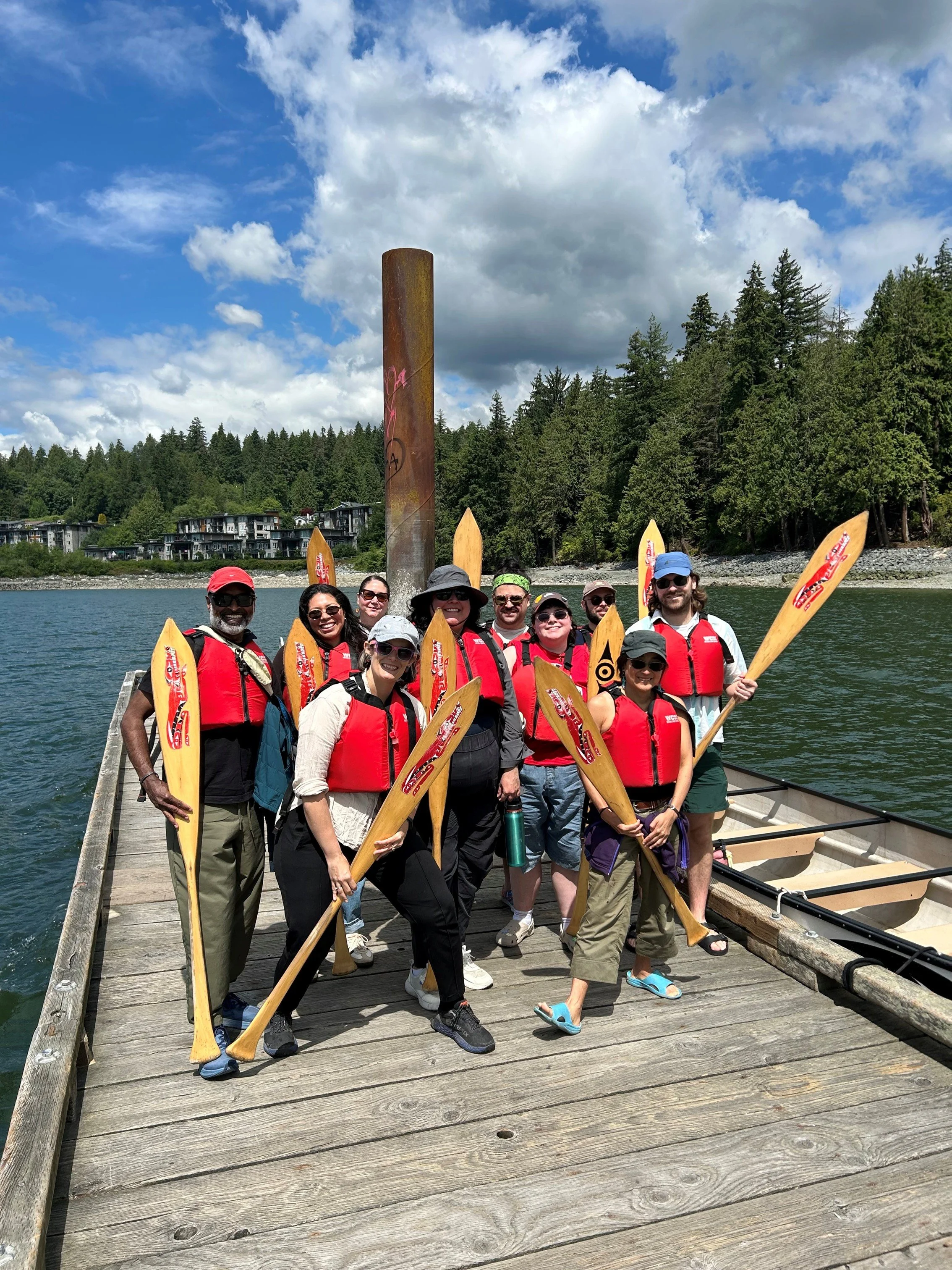
The design and sequencing of the CANOE workshops were also inspired by local Coast Salish protocols of approaching community by canoe, as practiced by the Indigenous stewards of these lands, particularly the xʷməθkʷəy̓əm (Musqueam) First Nation. Drawing from teachings reflected in the artworkwəɬ m̓i ct q̓pəθət tə ɬniməɬ by Musqueam artist Diamond Point, the workshop is intentionally structured to mirror the relational process of arrival: first announcing who you are and where you come from (positionality), then asking permission to come ashore (considering whether and how to engage), and finally awaiting a welcome (centring meaningful and reciprocal relationships). Just as the artwork evokes paddlers approaching shore in alignment with protocol, raising paddles that signal identity, intention, and respect, the CANOE framework invites researchers to move thoughtfully, through relationship-building practices grounded in accountability, humility, and ethical principles.
Workshop Activities
-
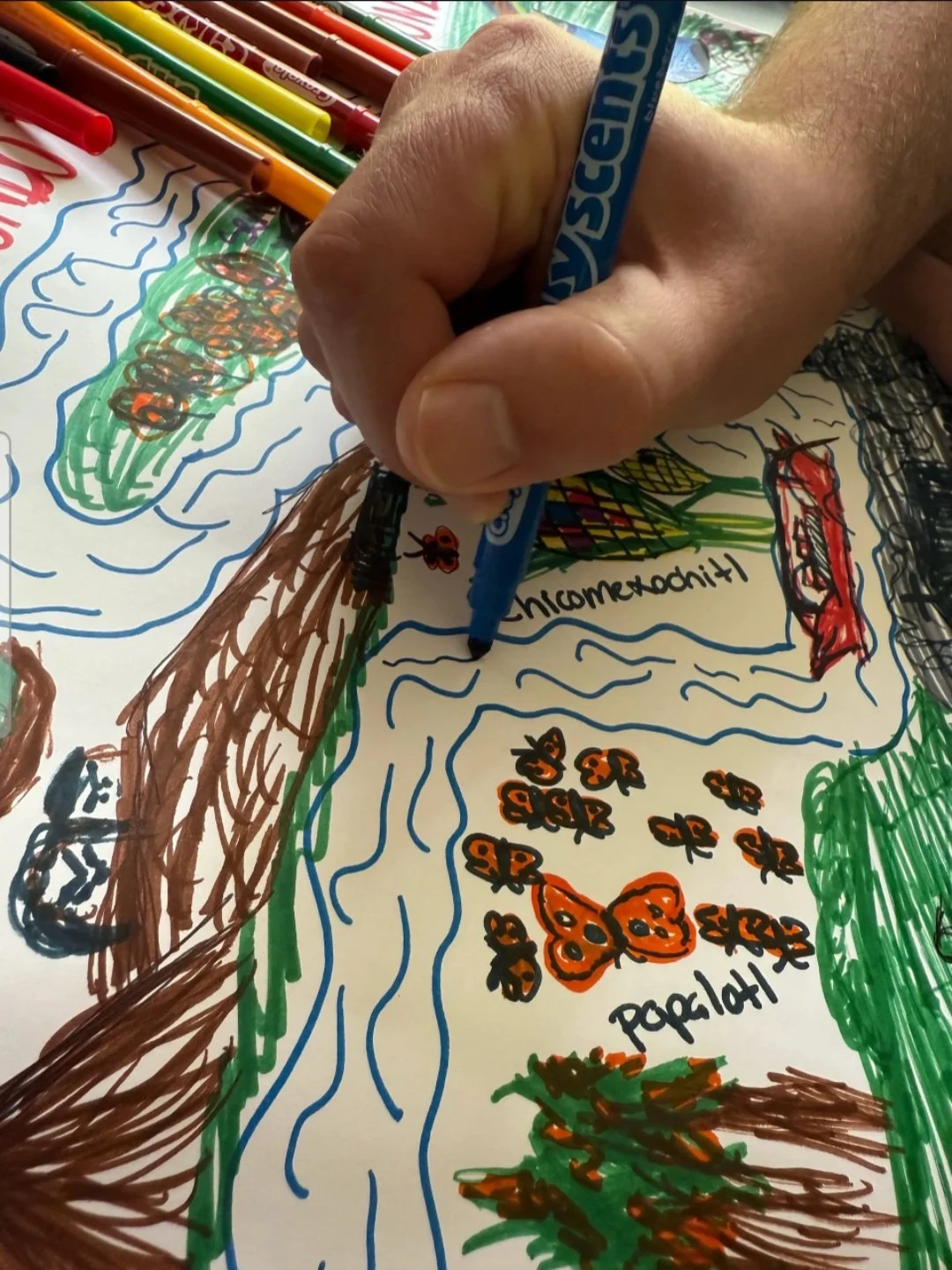
The River of Life exercise is designed to help you reflect on where you have come from and visualize your significant life experiences. This activity is a metaphorical and creative exercise in which you will illustrate your personal and professional journey using the visual of a river.
-
This activity invites participants to reflect on their identity, power, privilege, and lived experience through a vessel metaphor. We ask participants to honestly assess who they are, how they move through research waters, and whether they are prepared to journey alongside others.
-
The Paddling Fingers activity employs the CANOE approach as a guiding structure to engage participants in collective reflection on research positionality, ethics, and relational accountability. It uses real-life research scenarios to illustrate a researcher's situation and how they might navigate (or fail to navigate) meaningful and reciprocal relationships with Indigenous communities.
CANOE Approach Workshop Request
We invite institutions, research teams, and community partners to bring the CANOE workshop into their own contexts as a way to deepen ethical, relational, and reflective approaches to community-engaged research with Indigenous communities. Grounded in principles of accountability, humility, and care, the workshop offers a meaningful space to build capacity and navigate research waters in a good way. If you are interested in hosting a CANOE workshop, click here to submit a request. We look forward to paddling together!
-
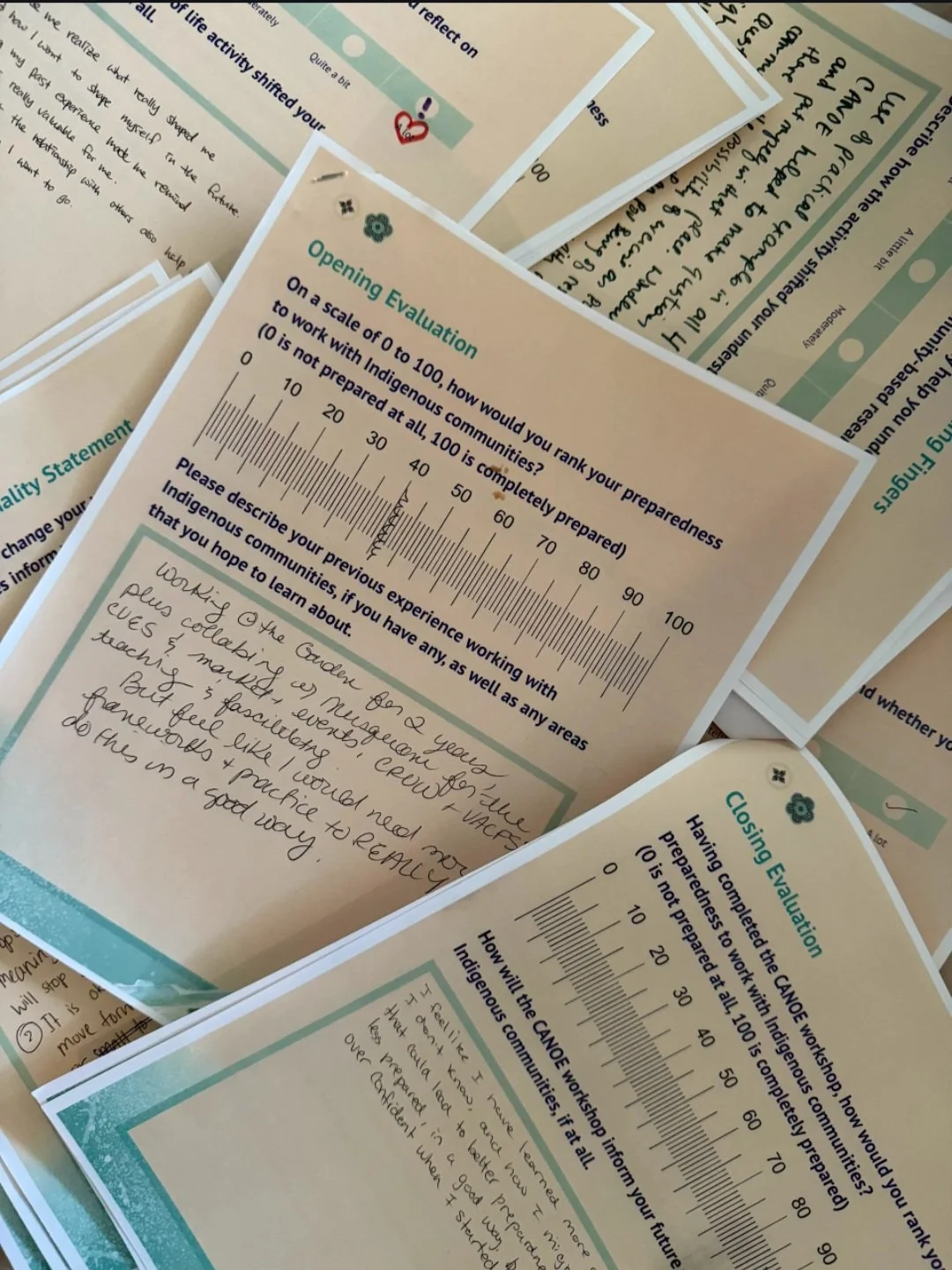
The CANOE Workshop Approach Series Report (Sept 2025 – Mar 2026) shares key insights from seven full-day workshops focused on community-engaged research with Indigenous communities. Drawing on participant feedback, the report highlights shifts in ethical awareness, relational approaches to research, and ongoing learning needs. It offers reflections, themes, and recommendations to support more thoughtful, accountable engagement across disciplines.
This report presents findings from seven full-day CANOE approach workshops delivered between September 2025 and March 2026. The workshops were delivered across diverse UBC faculties and units: UBC’s Roots for Indigenous Partnered Research (1), Sociology (1), Science (2), Medicine (2), and Graduate & Postdoctoral Students (1) for more than 70 participants. Across sessions, the workshops emphasized ethical and relational approaches to research, critical reflexivity and practices of consent, reciprocity, and long-term relationship-building. Participants learned to journey slowly, ethically, and in deep partnership with the communities they hope to paddle along with.
Read the full report here.
-
The CANOE Approach workshop is grounded in the CANOE (Circumspect Awareness and Navigation of Outcomes and Expectations) framework, originally developed by Katherine A. Collins, Kimberly R. Huyser, and Michelle Johnson-Jennings as part of CoVaRR-Net and later published in The Lancet Global Health. The workshop development has been supported through funding from the UBC Indigenous Strategic Initiatives (ISI) Fund.
-
Kimberly R. Huyser, Katherine A. Collins, Daniel Gallardo Zamora, Ninan Abraham, Sam Filipenko, Tamara Chavez, Mary G. Jessome, Sophie Carriere, Aria Viveiros & Michelle Johnson-Jennings
Co-applicants from the Faculty of Medicine, Faculty of Science, Faculty of Arts, and the Vice-President, Research & Innovation office, the Indigenous Research Support Initiative
Collaborated to create the CANOE Approach workshop from original materials
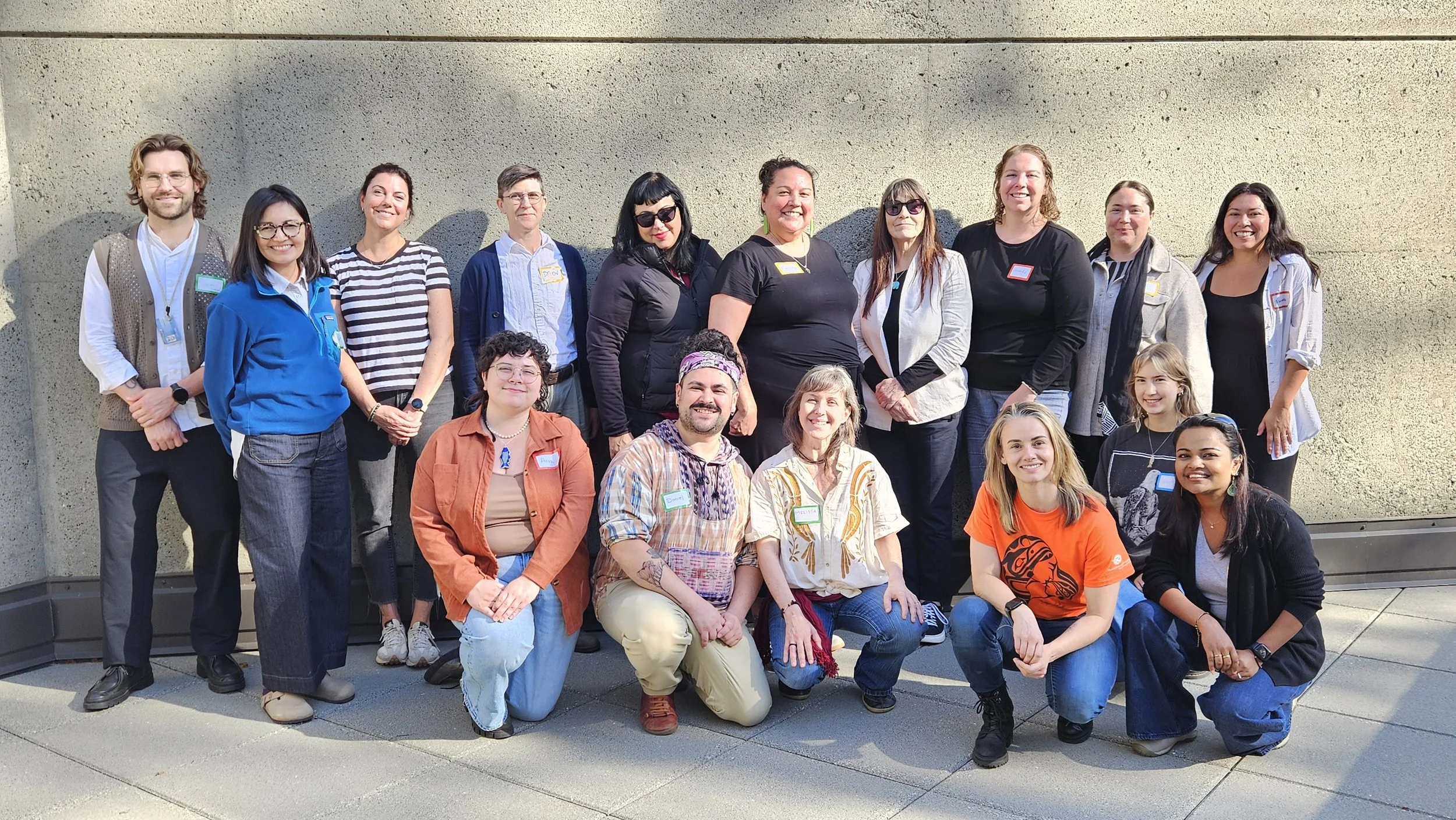
Co-Facilitate workshop across UBC Faculties
Advisory Council
Provide feedback to shape the workshop
Participate/co-facilitate workshop with UBC Faculties